
Digital Debt Collection: How Indian Lenders Recover Faster with Automation
How Indian NBFCs and lenders use digital debt collection, across SMS, WhatsApp, email, and AI voice, to recover overdue EMIs faster and at a lower cost per contact.
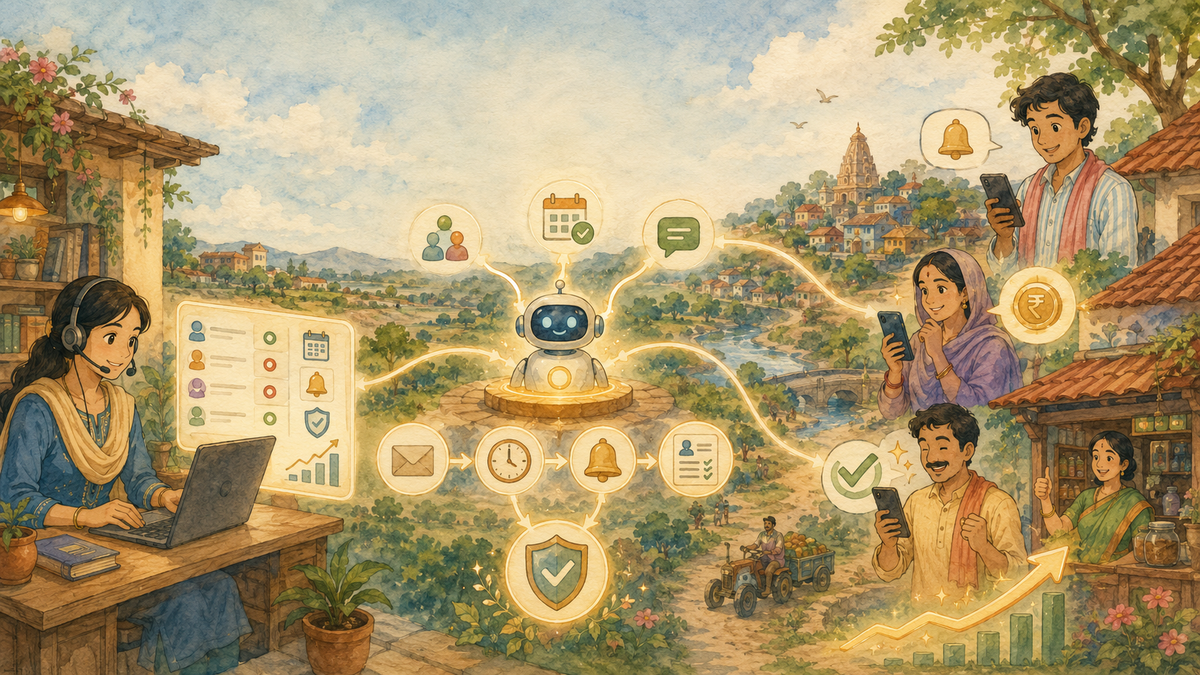
A borrower misses an EMI on the fifth of the month. By the tenth, field agents have been dispatched across two cities, a stack of reminder calls has gone unanswered, and the account is already 10 days past due. Multiply that by 40,000 accounts and the cost of chasing each rupee starts to rival the rupee itself.
This is the problem digital debt collection was built to solve. Instead of adding people every time the book grows, lenders reach borrowers through SMS, WhatsApp, email, and AI voice agents, segment accounts by risk, and recover faster at a lower cost per contact.
This guide covers what digital debt collection is, how the channel stack works, how to segment by days past due (DPD), the recovery economics, and how to keep recovery conduct anchored to the RBI Fair Practices Code.
What Is Digital Debt Collection?
Digital debt collection is the practice of recovering overdue loans through automated digital channels, SMS, WhatsApp, email, and AI voice agents, instead of relying only on field visits and manual call centres. It uses borrower data to segment accounts by risk and days past due, then routes each account to the right channel at the right time.
For an NBFC or fintech lender, this is a shift in operating model, not just tooling. A traditional collections team is capped by how many calls and visits its people can make in a day. A digital-first approach treats every overdue account as data first, deciding which borrower to contact, on which channel, at what time, and with what message, before an agent ever gets involved.
The goal is not to remove human recovery officers. It is to let them spend their time on the accounts that genuinely need judgment and negotiation, while automated channels handle the high-volume, repetitive contact that makes up most of an early-stage book.
From Field and Agency Recovery to Digital Collections
Recovery in India has moved through three broad phases, and most lenders now run some mix of all of them.
The manual model and its ceiling
Field visits, in-house tele-callers, and third-party agencies were the default for decades. They still work for hard, late-stage accounts. The problem is cost and reach. A field officer might close a few dozen visits a day, a tele-caller a few hundred dials, and agency commissions eat into whatever is recovered. As a loan book grows, this model scales only by hiring, and hiring is slow.
Digital and automated collections
Automated debt collection software replaces part of that manual effort with scheduled, data-driven contact. It connects to your loan management system, watches for missed EMIs, and triggers the right message on the right channel the moment an account slips into a bucket. Every touch is logged, so you can see what was sent, when, and how the borrower responded.
Where AI voice fits
Text and messaging handle reminders well, but many overdue conversations need a reply: a reason for the delay, a promise-to-pay date, a walkthrough of the payment link. This is where AI voice agents come in as the automated-voice layer of a digital stack, holding natural conversations in the borrower's language and capturing the outcome. For a deeper primer, see what AI debt collection is.
The Multi-Channel Collections Stack
No single channel recovers a whole book. Each one has a job, and the skill is matching channel to bucket and borrower.
SMS: the workhorse of early buckets
SMS reaches almost every borrower, needs no app, and suits pre-due nudges and early reminders with a payment link. It is cheap per message and easy to schedule at scale. Its limit is that it is one-way, so it prompts action but cannot hold a conversation. Many lenders lead with SMS debt collection for the first few days past due, then escalate.
WhatsApp: richer, two-way reminders
WhatsApp adds structure that plain SMS cannot: payment buttons, statements, language options, and a thread the borrower can reply to. Read and response rates tend to run higher than SMS for customers who use it daily. It works well for early and mid buckets, where a borrower may have a quick question before paying.
Email: records for higher-value accounts
Email carries detail well, including statements, settlement letters, and formal notices, and it creates a written record. Open rates are lower than messaging in most consumer segments, so email tends to support rather than lead recovery, especially for larger-ticket loans where documentation matters.
Voice AI: conversations at scale
Voice is still the channel that moves a stuck account, because a real exchange builds commitment. The constraint has always been human capacity. AI voice agents remove that ceiling by placing thousands of calls in parallel, in Hindi and regional languages, and logging every outcome. 8loop deploys these agents as the automated-voice layer of a digital collections stack, so early-bucket reminder and follow-up calls run without adding callers.
Segmenting Borrowers by DPD and Risk
Digital collections only pays off when it is targeted. Blasting every account with the same message on every channel wastes money and irritates borrowers who were going to pay anyway. Segmentation by days past due and risk decides channel, tone, and intensity.
Pre-due and 1 to 30 DPD
Most of the book sits here, and most of it self-cures. Light, low-cost contact is enough: a pre-due SMS or WhatsApp reminder with a payment link, and a friendly AI voice call for accounts that miss the due date. The aim is convenience, not pressure.
31 to 90 DPD
These accounts need a reason and a plan. Contact moves from reminders to structured conversations: why the payment slipped, when it will land, and what options exist. Voice and WhatsApp carry more weight here, and human officers step in for higher-value or complex cases.
90 plus DPD
Late-stage accounts are where field recovery, legal notices, and specialist agencies still earn their place. Digital channels support the effort with documented reminders and scheduling, but recovery here is hands-on and account by account. Automating the earlier buckets frees your best officers to focus their time exactly here.
The Recovery Economics
The case for digital debt collection rests mostly on two numbers: cost per contact and contact rate. A field visit or a manual call carries salary, travel, or per-seat cost, and a person can make only so many in a day. An automated message or an AI voice call costs a fraction of that and runs around the clock.
The second lever is speed. Reaching a borrower first after a missed EMI, while the money is still available, lifts recovery in early buckets. Automated channels make contact within minutes of an account slipping, not days. Reserve expensive human recovery for the accounts that actually need it, and the blended cost of recovering each rupee falls. For a closer look at the calling side, see our breakdown of AI for loan recovery.
| Dimension | Traditional / manual | Digital / automated | AI-voice-led |
|---|---|---|---|
| Speed to contact | Days (dispatch, dial lists) | Instant (scheduled sends) | Instant, and holds a live conversation |
| Cost per contact | High (salary, travel, per seat) | Low (per message) | Low to moderate (per call minute) |
| Scale | Capped by team size | High across messaging | Thousands of calls in parallel |
| Audit trail | Manual notes, patchy | Logged automatically | Logged and transcribed |
The exact gains depend on portfolio mix, ticket size, and how cleanly your book is segmented. A high-volume, small-ticket consumer lender will see a bigger shift than a lender with a few large accounts, where human relationships still dominate.
Recovery Conduct and the RBI Fair Practices Code
Digital does not change the rules of fair recovery; it changes how easily you can follow and evidence them. The Reserve Bank of India Fair Practices Code sets expectations for how regulated lenders and their recovery agents conduct themselves, including contacting borrowers at reasonable hours, avoiding harassment, and treating them with dignity. These expectations apply whether contact is a field visit, a manual call, or an automated message.
Automated channels can make good conduct easier to maintain. Contact windows can be enforced in software, scripts stay consistent, and every message and call is logged and can be transcribed, which gives you an audit trail if a borrower disputes how they were treated. Commercial communication over SMS and voice also falls under TRAI regulations covering unsolicited commercial communication, so consent and preference handling matter alongside the recovery rules.
This is general information on the regulatory landscape, not legal advice. Confirm your specific obligations with your compliance team.
Frequently Asked Questions
What is digital debt collection?
Digital debt collection is the recovery of overdue loans through automated digital channels such as SMS, WhatsApp, email, and AI voice agents, rather than field visits and manual calling alone. Lenders segment accounts by risk and days past due, then contact each borrower on the channel most likely to get a response. The result is faster contact, lower cost per account, and a consistent, auditable record across every overdue EMI.
How is digital debt collection different from traditional collection?
Traditional collection leans on field agents, agency teams, and manual call centres, which are slow, costly, and hard to audit at scale. Digital debt collection reaches borrowers instantly through SMS, WhatsApp, email, and AI voice agents, and logs every interaction automatically. Field recovery still matters for hard, late-stage accounts, but for early DPD buckets digital channels contact far more borrowers per day at a fraction of the cost per contact.
Is digital debt collection allowed under RBI rules?
The RBI Fair Practices Code sets expectations for recovery conduct, such as contacting borrowers at reasonable hours and avoiding harassment, and it applies whether contact is manual or digital. Digital channels can help by logging every message and call for audit. Commercial SMS and voice contact also falls under TRAI rules. Treat this as general information, not legal advice, and confirm your obligations with your compliance team.
How much can digital debt collection reduce recovery costs?
Savings come mainly from cost per contact and contact rate. A field visit or manual call carries salary, travel, or per-seat cost, while an SMS, WhatsApp message, or AI voice call costs a fraction and runs around the clock. Lenders typically reserve field recovery for high-value or late-stage accounts and let digital channels handle early buckets. The exact reduction depends on portfolio mix, ticket size, and how well accounts are segmented by DPD.
What is the best digital debt collection software or platform in India?
The best digital debt collection software in India depends on your portfolio, channels, and integrations. Look for a debt collection platform that connects to your loan management system and telephony, supports SMS, WhatsApp, email, and voice in regional languages, and keeps a full audit trail for RBI Fair Practices alignment. 8loop is one option for the AI voice layer, deploying AI voice agents that handle high volumes of early-bucket reminder and follow-up calls.
How do lenders get started with a digital debt collection platform?
Start by segmenting your book by days past due and risk, then map each segment to a channel: automated reminders for pre-due and early DPD, escalating to voice and field recovery for older buckets. Connect your loan management system and telephony to an automated debt collection software layer so messages and calls trigger on schedule. Begin with one bucket, measure contact rate and cost per recovery, then expand once it proves out.
Recover Faster with 8loop
Digital debt collection is now the default operating model for Indian lenders that want to recover faster without growing their recovery teams in step with their book. The lenders pulling ahead are the ones matching each bucket to the right channel and reserving human effort for the accounts that need it. For a full view of the tools and where each fits, see our guide to the best debt collection software in India.
8loop provides the AI voice layer of that stack, deploying AI voice agents that handle high volumes of reminder, follow-up, and promise-to-pay calls in Hindi and regional languages, with every call logged. See 8loop in action and find out how much of your early-bucket calling can run on autopilot.


